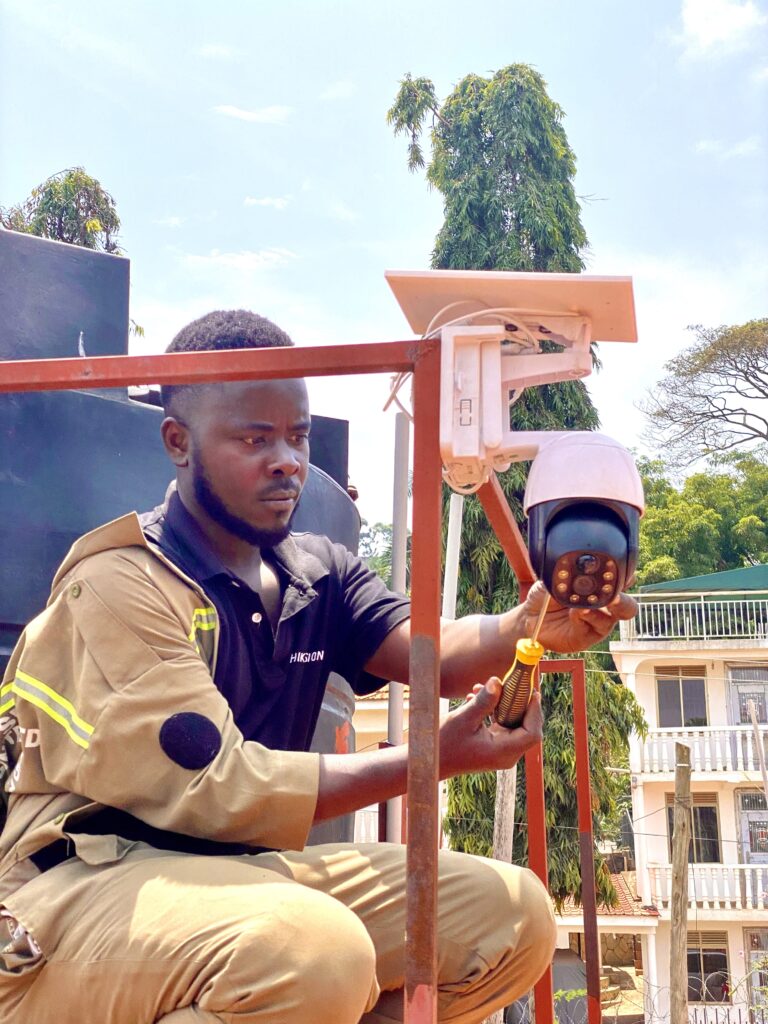
Securing a remote property in Uganda presents a unique set of challenges. Whether you are managing an active construction project in Kira, overseeing a large acreage in Wakiso, or protecting a vacation home in Entebbe, the lack of reliable grid power often leaves assets vulnerable. Solar CCTV has emerged as the definitive solution for off-grid surveillance, providing high-definition monitoring in areas where the traditional power grid has yet to reach.
Why Solar CCTV is Essential for Ugandan Remote Sites
In the Ugandan context, “remote” doesn’t always mean miles into the bush; it can simply mean a new site in Najjera or Gayaza where the Umeme connection is still pending. Relying on fuel-heavy generators for site security is expensive and inefficient for 24/7 monitoring.
A robust solar-powered security system utilizes photovoltaic panels to charge high-capacity deep cycle batteries, ensuring the NVR (Network Video Recorder) and cameras remain operational through the night and during the rainy seasons.
Technical Components of a Reliable System
To maintain high-authority security, your setup must be more than just a camera and a small panel. A professional-grade installation involves:
- High-Efficiency Solar Panels: Sized to account for peak sun hours and overcast days in the Lake Victoria basin.
- 4G LTE Connectivity: Since remote sites lack fiber-optic cables, industrial-grade routers with local SIM cards ensure you can view live feeds from Kampala or anywhere in the world.
- Weatherproof Rating: Equipment must have an IP66 or IP67 rating to withstand Uganda’s intense tropical heat and heavy downpours.
- Smart Analytics: Features like PIR (Passive Infrared) sensors and human detection reduce false alarms, saving battery power and data.
Expert Note: When securing a site, ensure your mounting poles have the necessary load-bearing capacity and structural integrity to withstand high winds. For professional assistance with the physical layout and heavy-duty installations,Spring Contractors Limitedprovides the technical expertise required for high-standard site preparation.
Integrating Security with Real Estate and Construction
The decision to install Solar CCTV should be made early in the project lifecycle. In the Real Estate sector, a secured site significantly increases the valuation of a property. When buyers see active surveillance on a piece of land with a clear land tenure (whether Mailo, Leasehold, or Freehold), it builds immediate trust that the land is free from encumbrance and illegal encroachment.
If you are looking for secure investment opportunities or titled plots in prime locations, Lighthouse Properties offers vetted listings where security and utility potential are top priorities.
Furthermore, during the construction phase, these cameras are vital for monitoring your BOM (Bill of Materials) usage and ensuring that concrete grade standards and slump tests are being followed according to the Building Control Act 2026.
Benefits of Solar Surveillance
- Zero Monthly Power Bills: Once the initial capital expenditure is covered, the sun provides free energy.
- Independence: System failure in the city’s power grid won’t affect your site’s safety.
- Scalability: You can easily add more cameras as your project expands from a simple foundation to a multi-story structure.
- Evidence Collection: High-definition footage is critical for legal disputes or insurance claims regarding site theft or boundary issues.
For a custom-tailored security audit and the latest in off-grid monitoring technology, CCTV Tech Solutions specializes in deploying advanced Solar CCTV systems across Uganda’s most challenging environments.
Conclusion: Future-Proofing Your Assets
Investing in Solar CCTV is not just about catching intruders; it is about total oversight and peace of mind. By leveraging renewable energy, you ensure that your remote investment—whether a private residence or a commercial hub—remains under a watchful eye 24 hours a day. As Uganda continues to grow, securing your perimeter with sustainable, high-tech solutions is the hallmark of a savvy property owner.